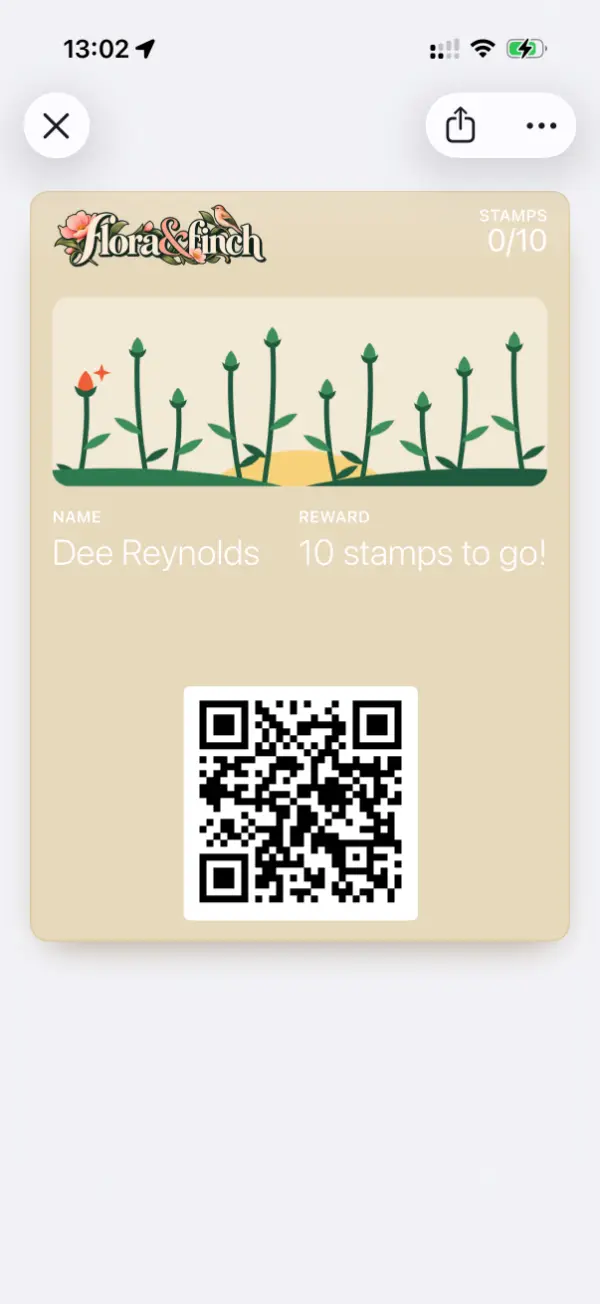
Many paper loyalty cards have ten boxes. Not because ten is the right number, but because the previous card had ten, and the one before that. It is habit.
The right number depends on two things: how often a good regular comes in, and what the reward actually costs. Once those two are clear, the number largely follows.
With StampMate stamp cards, owners can choose anywhere from 4 to 10 stamps. Here is how to choose the right one.
Question one: how often do regulars visit?
Start with the good regulars, the ones staff would recognise in the street. How often do they come in?
- A few times a week (morning coffee, lunch on the way to work)
- About once a week (the Friday takeaway, the Saturday pint)
- Every few weeks (a haircut, a beard trim, a nail appointment)
The reward needs to feel reachable. If it takes the best part of a year, the card stops working as a nudge.
As a rough guide, a good regular should be able to fill a card in a month or two. For businesses people visit only monthly, treat four or five months as the outer limit, and expect to sit at the low end of the range.
Question two: what does the reward cost?
This means the cost price, not the menu price. A coffee that sells for £3.40 does not cost £3.40 to give away. It costs the beans, the milk and the cup.
The useful sum is how much the customer has spent by the time their card is full, and what share of that the reward costs. A pricier reward can justify more stamps. A cheaper one needs fewer.
A simple way to work it out
- Count roughly how many times a good regular visits in a month.
- Decide how many months a card should take to fill.
- Multiply the two. That is the starting number.
- If it’s over 10, use 10. If it’s under 4, use 4.
- Sense-check it against the cost of the reward.
Here is how that works in three illustrative examples.
Worked example: a café
Say regulars come in about three times a week, and the average coffee is £3.40. Assume it costs around 60p to make, cup included.
- 10 stamps: a three-a-week regular fills it in just over three weeks. By then they’ve spent £34, and the free coffee costs about 60p. That is under 2p in every pound spent.
- 8 stamps: filled in under three weeks. They’ve spent £27.20, and the reward costs the same 60p, about 2p in every pound.
For a busy café, 8 to 10 works well. The card fills fast enough to feel rewarding, and the reward barely affects takings. If the crowd is more weekend brunch than weekday commute, drop it to around 6. More on our cafés page.
Worked example: a barber
Say a regular comes in every four weeks for a £20 cut.
- 10 stamps: 40 weeks. More than nine months to earn a reward. Most people will have lost interest, or lost track, long before.
- 5 stamps: 20 weeks, a bit under five months. They’ve spent £100.
- 4 stamps: 16 weeks, a bit under four months. They’ve spent £80.
The difference here is that the reward costs time, not beans. A free £20 cut on a 4-stamp card is generous: one cut in five is free. So either go a little longer with a big reward, or keep it short with a smaller one. A 5-stamp card with a free cut and a 4-stamp card with a free beard tidy both add up.
Owners write their own reward wording, so it can be specific, for example “Free cut, Monday to Wednesday”. That way free cuts fall in quieter slots rather than on a packed Saturday. More ideas on our salons and barbers page.
Worked example: a takeaway
Say a regular orders once a week and spends about £18. The reward is a free main, which is £11 on the menu but, for this example, costs around £3.50 in ingredients and packaging.
- 8 stamps: two months to fill. They’ve spent £144, and the reward costs £3.50. Under 2.5p in every pound.
- 6 stamps: six weeks to fill. They’ve spent £108. The reward is a little over 3p in every pound.
Either works. Six feels more rewarding for the customer; eight is slightly better for the business. See our restaurants page for more.
Why not fewer than 4, or more than 10?
Go much below four and the reward arrives so quickly it stops feeling like a treat and starts feeling like a permanent discount. Go much above ten and the finish line is so far away that people stop chasing it. Somewhere in between is where a card does its job.
Want more stamps without losing people?
A longer card can feel like a slog. Two things help.
Remind them how close they are
A StampMate card lives in the customer’s Apple Wallet or Google Wallet, and when a stamp lands, the card on their phone updates straight away. Progress people can see is progress they keep chasing.
Customers can also be given a reason to come in between visits. With promotions, the owner writes a short message, such as “Quiet afternoon? Half-price cake till 4”, and it lands on customers’ lock screens through their Wallet card. It can go to everyone, or to one regular who is due a visit. The Core plan includes two a month; Growth is unlimited.
Make the finish line exciting
Spin the wheel comes with the Growth plan. Once it is switched on, a full card draws a prize from the business’s own prize wheel. Owners choose between 2 and 10 prizes and set how likely each one is, for example a free coffee most of the time and something bigger occasionally. The uncertainty of “what am I going to get?” makes a few extra stamps feel worth collecting.
The short version
- Regulars in a few times a week: 8 to 10 stamps.
- Regulars in about once a week: 6 to 8 stamps.
- Regulars in every few weeks: 4 to 6 stamps.
- Pricier reward: lean towards the top of the range. Cheaper reward: lean towards the bottom.
With a number chosen, see how the card looks in the pass designer: pick a template, add a logo and colours, and check the live preview. No account is needed to try it.